Monday, August 22, 2011

Whole Wheat from the Ground Up


Last fall, as an extension of the first grade Plants and Animals FOSS kit (FOSS is the hands on science curriculum), Ms. Fisher's first grade class planted wheat during garden time. At first we measured the wheat plants' growth, but after a while gave up as it got taller than the students, taller than our yard sticks.

The first seeds we planted, blue beard wheat seeds grown in a community garden in Martinez, which I had gotten from a seed saving exchange at the Ecology Center in Berkeley, did not sprout well. So on December 1st we replanted red winter wheat seeds from the wheatberries grown at Full Belly Farm in the Capay Valley. I bought those at the farmers' market in Berkeley.


The students noticed new kinds of insects attracted to the wheat (soldier beetles, which eat aphids), and differences between the seed heads. They learned that wheat seeds go through stages before they can be harvested--first the "milk" stage, where each seed oozes a white liquid when squeezed, then the "dough" stage. Finally, the seed is dry and hard, ready to be harvested, threshed, and ground into flour.

We harvested, threshed, and ground the wheat the last week of school, and Ms. Fisher made whole wheat banana muffins with her class on the last day, to rave reviews from the children. I saved some of the wheat berries from Ms. Fisher's wheat, so the first grades this year will plant these seeds (before December this time, since it takes at least six months to reach maturity). This is how our ancestors propagated and developed different varieties over time. If we kept saving and planting the wheat seeds we grew every year, eventually we'd develop our own heirloom variety of wheat specially adapted to our soil and climate--we could call it the "Redwood Heights School" variety of wheat.
Posted by Picasa

Carrots from the Rooftop

It was a very exciting day last May when Ms. Weissman's class finally got to harvest their carrots. These had been in the ground (well, in barrels of dirt on the roof) for over 6 months. I tried to remind them of when we had planted them from seed, but that was all forgotten in the crunch of the moment. There's nothing sweeter than a fresh carrot! Later, they harvested the onions and garlic. There were enough for each child to take one home, and they were beaming with pride.
Posted by Picasa

Fabulous Spring Veggie Fried Rice

Last April, after cooking stir frys and making salads with all the classes, I once again had too many vegetables ready in the garden to use during garden class. They were starting to go to seed. Luckily, Mary Dalsin and Kim Cole came to the rescue, and cooked up several huge bowls of greens and spring onions from the garden to make a fabulous veggie fried rice dish for the children to choose at lunch. The recipe was simple, based on my ten minute stir fry (see previous post), with egg, served over rice.


The children gave it a thumbs up, and many wanted seconds. Part of the "Waste Free Lunch Week," we served it in paper containers (compostable), with a plastic utensil to be reused (we collected and washed them). I didn't notice any uneaten stir fry in the compost bin, which contrasts with the amount of food from the school lunch the students usually throw out. I think it just proves again that if the vegetables are fresh, and cooked fresh, children will ask for them by name. And really, who can blame them?

Greens Taste Test

We grew a lot of greens last winter--swiss chard, kale, collard greens, red cabbage, and the ever popular broccoli greens. As the children have learned, the leaves of the broccoli plant are edible and quite tasty. In garden class we held a greens taste test, raw and stir fried in a little olive oil. Both broccoli greens and swiss chard were popular, but all five greens were the favorite of at least one child in each class.

Not only were the greens tasty, but the children learned they are nutritious as well. Besides B vitamins, many greens are a significant source of vitamins C and A. If we had a test of which greens are the most nutritious, kale would likely be the winner, with three times the daily value of vitamin A in each serving.

Blue Corn Tortillas

At the multi-cultural fair the garden committee hosted a table for making blue corn tortillas with the blue dent corn the kids grew in the garden. First the kernels were shucked off the cobs by the kids during garden class. Then the hard kernels were soaked overnight in lime to soften. Here are the kids grinding the corn on a real metate from the Peralta Hacienda.


After the corn was ground into meal, we added water to make a dough, which the kids formed into balls and flattened. Here they are cooking on the electric skillet.


Time to eat, with fresh salsa on top! Thanks to Jenny Svoboda, Mary Dalsin, Sandra Ferrer, Rick Randel, and Staci Markos for all their hard work making this happen.


Posted by Picasa

Tuesday, March 8, 2011

My Tasty Ten Minute Stir Fry


What do you do when you have 12 to 15 hungry children who want a change from the usual raw cabbage and chard leaves, and you're a little short on time? That's easy! Sit them down (if there's room in your kitchen), have a chat about nutrition, while you (and another grown-up in this situation) whip up this ten minute stir fry.

Works just as well if you have less than 12 children, and a little more time.

You'll need a skillet with a lid.

Ingredients:

1 T olive oil or butter
fresh spring onions (if you have them, or a bulb onion)
fresh greens--chard, cabbage, collards, broccoli leaves, russian kale, dinosaur kale, kohl rabi
tamari or soy sauce
sesame oil

(Note: if you're using collards or cabbage in this recipe, the butter is recommended, as it will break down the leaf and release the nutrients.)

Wash and chop onions (whites and most of the greens if using spring onions) into small slices, and greens into ribbons.

Cook onions in olive oil or butter in a frying pan on high heat, until soft.

Add greens and stir often. Pour in a little tamari (maybe a teaspoon) and some sesame oil (about the same amount). Cover the pan and lower the heat. Let it cook, covered, for a few minutes until the greens turn color--bright green or dull olive, depending on the type.

Uncover the pan, and stir a few more times. Serve hot.

The kids will eat this right out of the pan. They have also enjoyed it when served with buckwheat soba noodles. If you had any sesame seeds, toast them in a dry skillet for a nice addition.

Enjoy.


Monday, March 7, 2011

Corn Ceremony


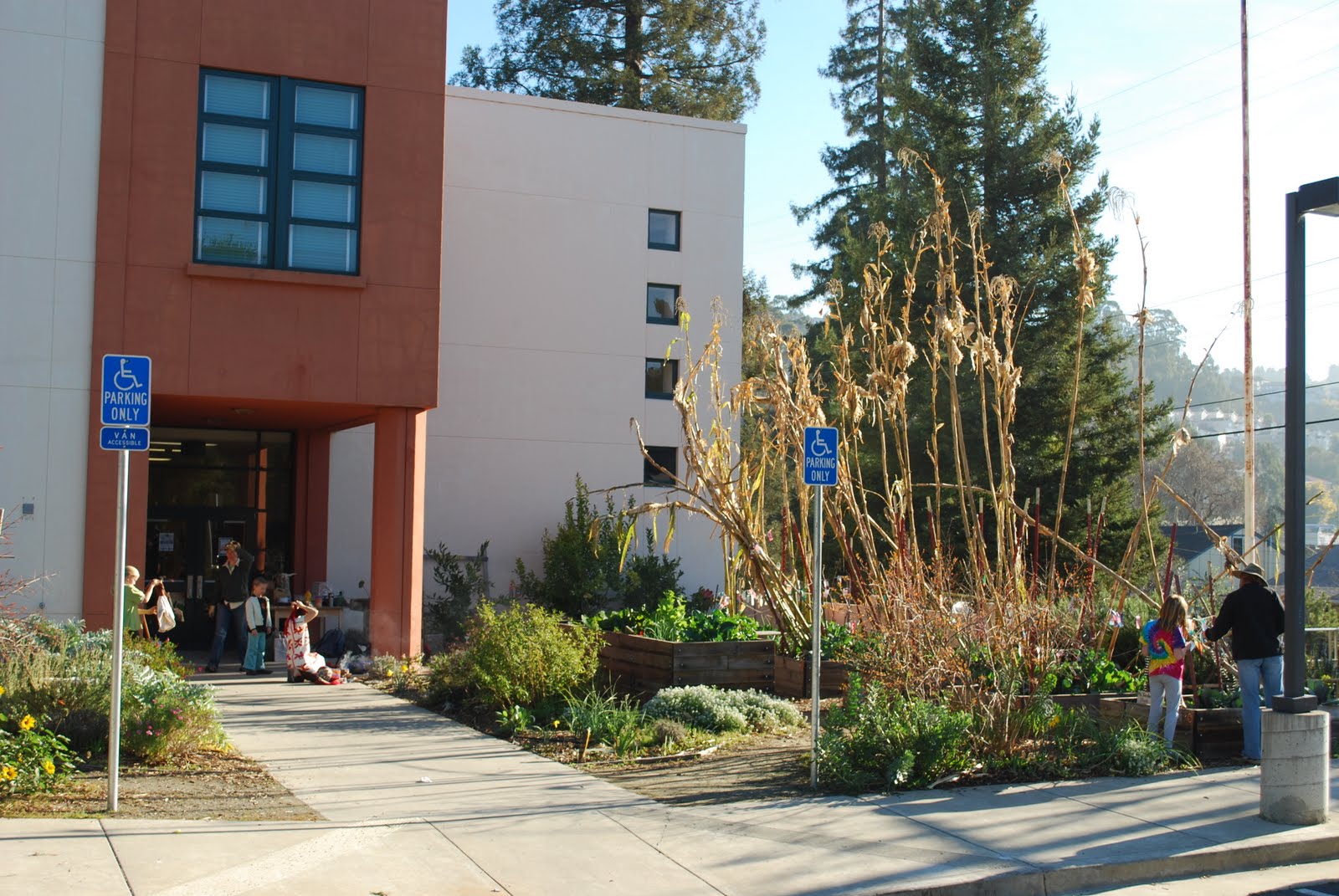
Last Spring, the second and third grade students planted blue dent corn, a type of corn which is made into cornmeal. (Think blue corn chips). I got the seeds from Schools for Chiapas, an organization working to help indigenous farmers in Chiapas, Mexico, to preserve their heritage crops. The package said the corn would grow to 15 feet, but I didn't believe it. In fact, the tallest corn plants eventually grew to about 18 feet! After the stalks had dried, we harvested the corn in February, following a beautiful ceremony. Patricia Juarez invoked the four directions in Nahuatl, the language of her grandparents, and English. I learned that blue corn is associated with the direction of the South, and with children! Isela Santana led us in a song about a seed, and Sandra Ferrer burned copal for purification.

After the ceremony, the children eagerly cut the stalks with loppers, and although the plants appeared dry and dead, they oozed water when cut. The stalks appear similar to bamboo, but without the same tensile strength. Julie Eakins built a fence from some of the cornstalks which you may have seen in the garden.

We will grind the corn at the multicultural fair in May. Here are some photos from the ceremony and harvest. Thanks to Bill Boyd for taking photos.

Invoking the four directions


Participants facing the West


After the ceremony, the children eagerly chopped down the tall stalks

Messages from the children to the corn flutter in the breeze